

Accessible design | Home | Sitemap | Search |
> history

History

For the very
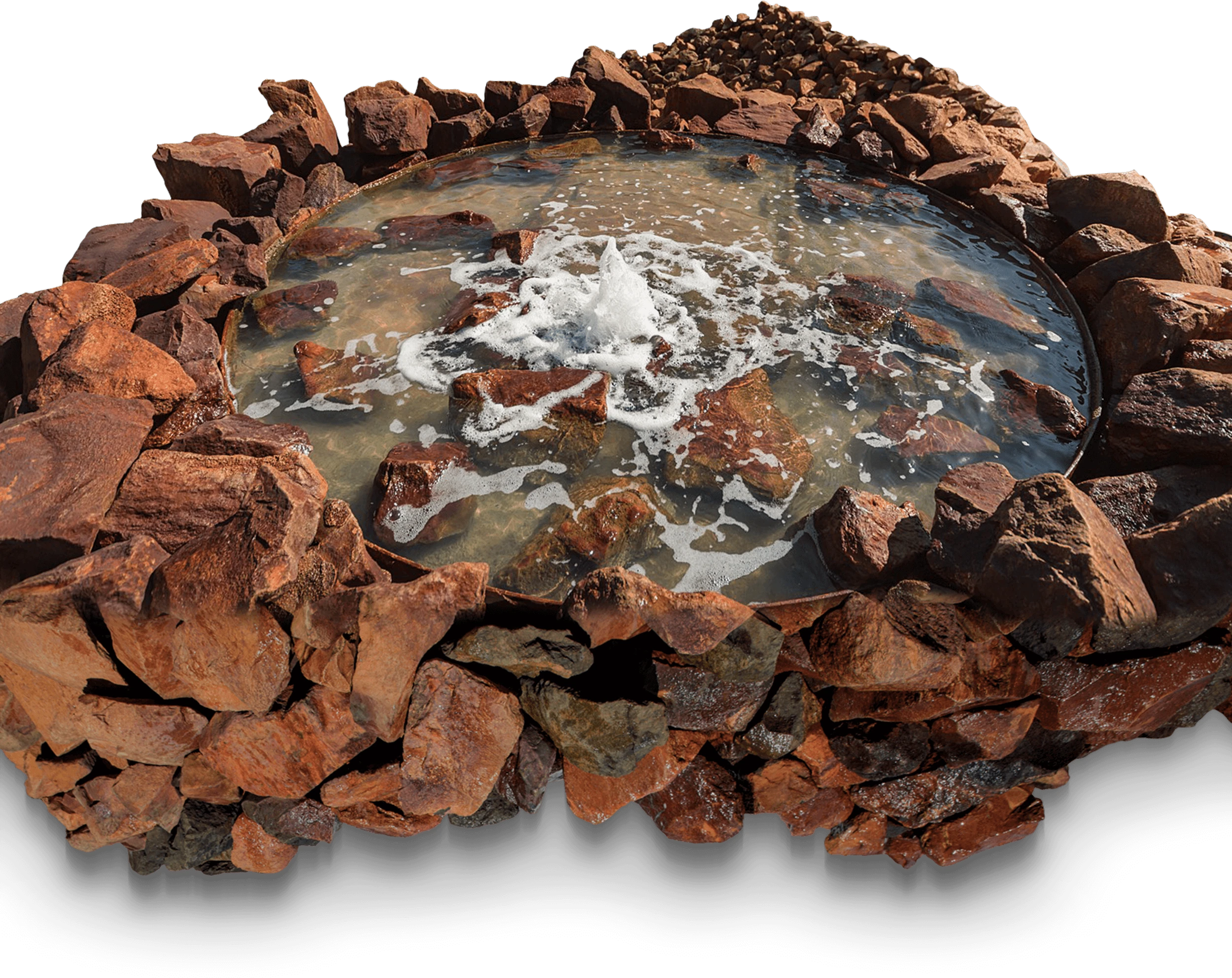
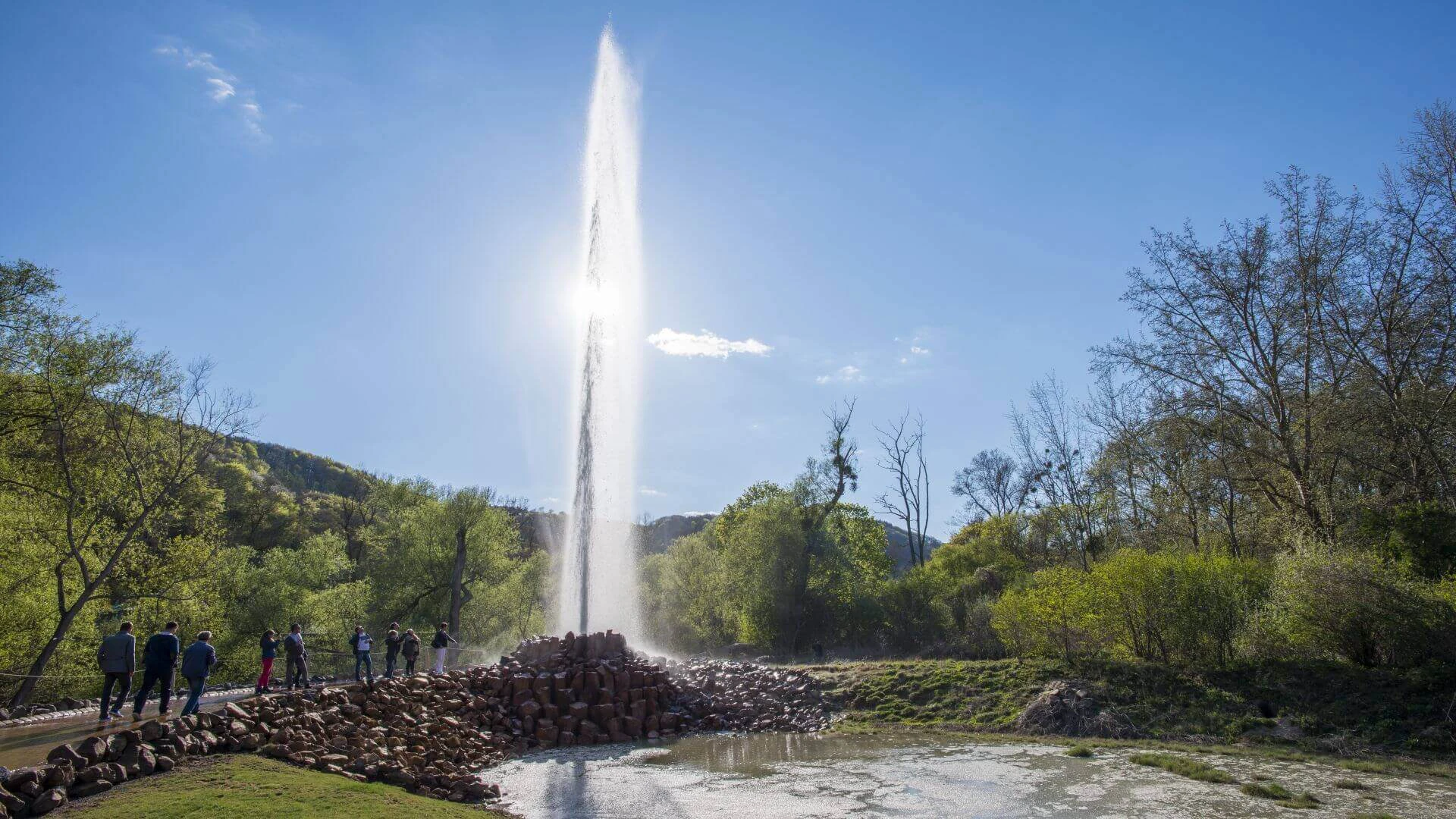
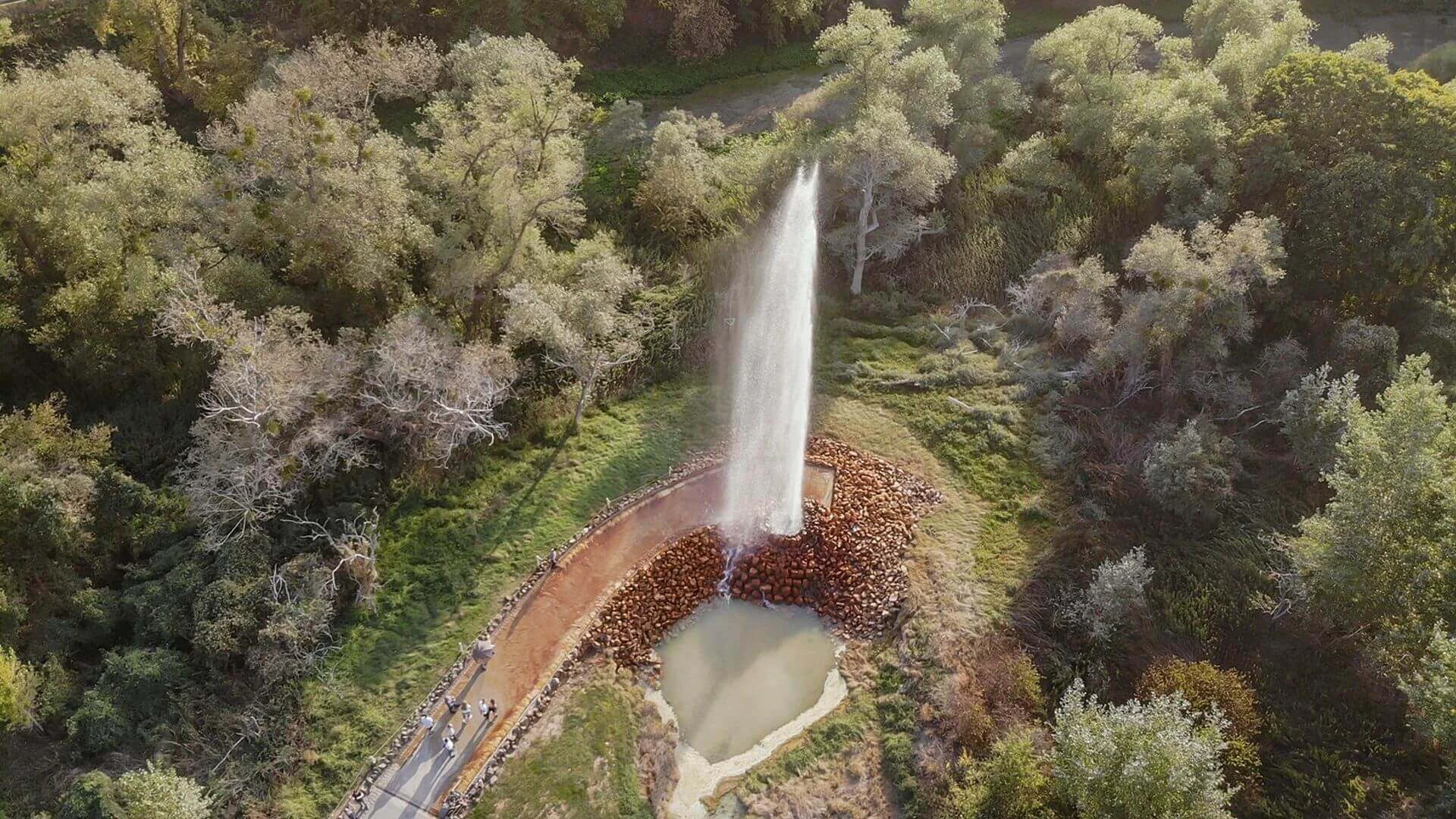
first time gas bubbles rising to the surface of the dead branch of the river Rhine in the vicinity of the peninsula “Namedyer Werth” were observed at the beginning of the 20th century. When in 1903/1904 a borehole was drilled in search of mineral springs/CO2 deposits the Geyser  “sprang” for the first time forming a water column 40 m high. The „Namedyer Sprudel GmbH“ then not only used the CO2 deposit  for commercial purposes but as early as in 1912 started to develop the natural sight for touristic purposes.

Gastronomy became established around the Geyser and riding festivals were organized regularly.

During Word War I and II the Geyser suffered considerable damage and in 1957 after further technical problems occurred it came to a complete standstill.

year/period                                                                                     Event

around 1900

Bubbles rising to the surface of the dead branch of the river Rhine in the vicinity of the peninsula “Namedyer Werth” are observed and considered to be sludge gas.1

1903-1904

1st drilling to a depth of 343 m, every 3-4 hours a fountain of 25 m3 of mineral water rises up to 50-60 m.2

1904

The “Namedyer Sprudel GmbH” starts to use the well for the production of mineral water.3

1918

The Geyser suffers heavy damages due to World War I, mineral water production is stopped, CO2 extraction continues.4

1920

The “Augustinus-Sprudel AG” with seat in Hönningen leases the site for the purpose of CO2 extraction for a period of 30 years.5

late autumn 1953

Due to damages the production of mineral water comes to a standstill.

1955

The “C. Deilmann AG” with seat in Bad Bentheim takes over the “Namedyer Sprudel GmbH” and carries out new drillings at a distance of 30 m south-east of the old spring to a depth of 850 m.7

5th September 1957

The company of Deilmann stops mineral water production.8

21st January 1958

1st water analysis: "thermal water containing sodium and hydrocarbon chloride".9

1966

The expert’s report of Dr. K. Fricke, Krefeld, confirms that the spring water is a natural mineral water.10

1966

Technicians inspect activity and pipes of the Geyser.11

1967

Due to the construction of the „B9-Krahnenbergbrücke“ the use of the well for commercial purposes is limited, the borehole is closed by a slide gate; technical drawings of the slide gate carry the date 10th July 1967.12

23rd December 1968

According to the authorization and license of the District Administration of Koblenz water rights are granted for a period of 30 years.13

22nd November 1985

The“Namedyer Werth“ becomes a  local nature reserve.14

12th January 1990

The town of Andernach buys the „Namedyer Werth“ from the „C. Deilmann AG”.15

25th June 1997

The District Administration of Koblenz extends the license granted on 23rd December1968 to the town of Andernach to extract ground water.

1999

Preliminary  geological, hydrogeological and geophysical investigations are carried out to determine the appropriate location for a new mineral spring containing CO2.17

9th June 2000

On occasion of the 1st meeting of the team formed to study the reactivation of the „Namedyer Geysir“ Prof. Hötzl and Mr. Krauthausen present different drilling methods and related costs and explain the conditions and difficulties related to the drillings (location, water pressure, floods, costs).18

20th September 2000

A request of exemption from the limitations of §4 of the regulations regarding the natural reserve "Namedyer Werth" is addressed to the „Obere Landespflegebehörde Struktur- und Genehmigungsdirektion Nord“.20

4th October 2000

Request of Approval of the Main Operating Plan to carry out hydrogeological investigation drillings.21

8th January 2001

Granting of exemption from some parts of the regulation regarding the natural reserve "Namedyer Werth".22

15th March 2001

An exceptional authorization to cut back small wood in the natural reserve "Namedyer Werth" is granted.23

4th April 2001

Approval of the Main Operating Plan of the municipal administration of Andernach for drilling works in connection with the "Neuer Namedyer Sprudel".24

3rd July 2001

Approval of the Special Operating Plan for the drilling plant "DBA 4" to develop the "Neuer Namedyer Sprudel".25

August 2001

Test drillings for an eventual reactivation of the “Namedyer Sprudel” are started.

2003

Start of preparations of planning and construction works for the “Besucherzentrum”.

10th May 2005

Agreement between the town of Andernach and the Federal Government: The Geyser is allowed to spring.

2006/2007

Another 2 years will pass before Geyser and Erlebniszentrum will be officially opened to the public. For all those who do not like to wait the town of Andernach offers the 1st "Geyser Summer" in 2006. At ten weekends about 5000 interested visitors are able to admire the natural spectacle. In summer 2007 nine thousand visitors already seize the opportunity to view the Geyser. 

2008

In June 2008 the “Geyser Summer 2008” starts a year before the opening of the Erlebniszentrum.

2009

Entry in the Guinness Book of Word Records as the highest cold-Water geyer.

2009

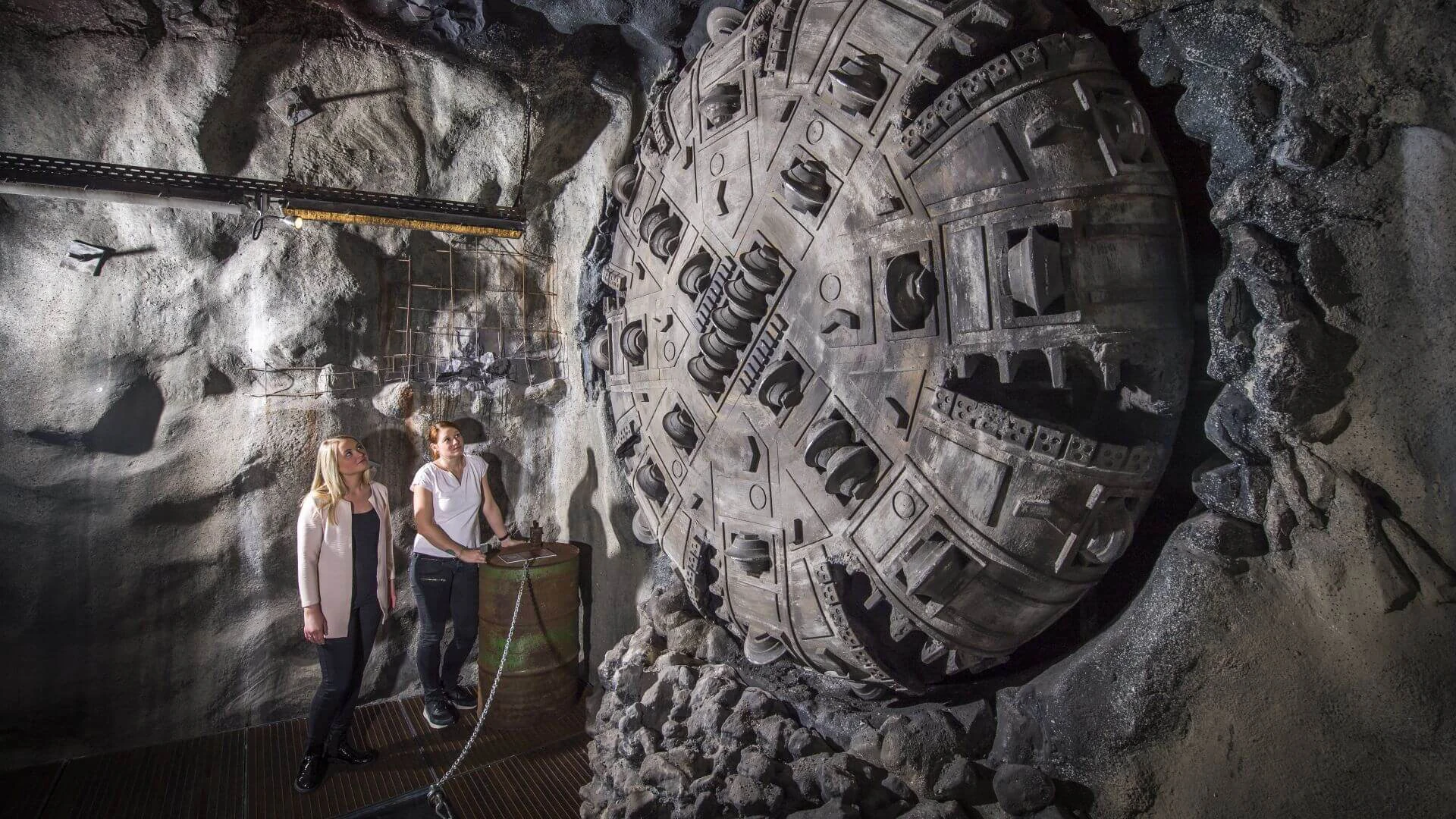
The Discovery Centre opens, and the Andernach Geyser is once again accessible to the public.


1.Archieves of the Town of Andernach, inv. N. 1411/84, collection Karl Wind, "Das Namedyer Werth und sein Geyser", undated

2. Heinrich, F.: Der Namedyer Sprudel bei Andernach. Published in: Zeitschrift für praktische Geologie, vol. XVIII, nov -dec. 1910,  p. 447

3. Archieves of the Town of Andernach, inv. N. 1411/84, collection Wind, a. a. O.

4. Archieves of the Town of Andernach, inv. N. 1411/84, collection Karl Wind, in the place cited

5. LHA Ko Best. 612 n. 4401, written by th Mayor Spaniol, p. 3

6. ibidem, inv.. 612 n. 4401, essay of Mayor Spaniol dated 29th December 1937, "Das Schicksal einer Rheinlandschaft". Niedergang und Aufstieg der Sprudelinsel bei Andernach.

7. Ibidem.

8. Ibidem.

9. Archieves of the Town of Andernach, inv. n. 10/97; Stadtwerke Andernach GmbH: Der Namedyer Sprudel; October 1996 Expert’s report of the “Chemisches Laboratorium Fresenius” at Wiesbaden, dated 21st January 1958

10. Ibidem.

11. Report in the Rhein-Zeitung, Andernach - Namedy dated 13th May 1966

12. Ibidem

13. Ibidem

14. Bezirksregierung Koblenz (Regional Administration of the District of Koblenz), Ordinance dated 22nd November 1985, effective on 16th December 1985 with its publication in the „Stadtanzeiger“ n. 48, p. 1100-1101

15. Sales Agreement dated 12th January 1990,  deed n. 39

16. Writing of the Bezirksregierung Koblenz dated 25th June 1997

17. Final Report of the Preliminary Investigations of the CO2 spring Namedy - Andernach by Prof. Dr. Heinz Hötzl and Dr. Wolfgang Breh, Dipl.-Geologe prepared for the Stadtwerke Andernach GmbH, Applied Geology Karlsruhe in January 1999

18. Writing of the „Wirtschaftsförderungsgesellschaft” (Association for Economic Development) dated 14th June 2000 addressed to the Stadtwerke Andernach GmbH

19. Writing of the Bezirksregierung Koblenz dated 9th December 2000

20. Office Dr. Sprengnetter und Partner Gbr, Bad Breisig, prepared in September 2000 by Irmgard Schröer, Dipl. Ing. (FH) Landespflege (preservation and increase of the national resources)

21. Office Dr. Sprengnetter und Partner Gbr, Bad Breisig, prepared in September 2000 by Irmgard Schröer, Dipl. Ing. (FH) Landespflege (preservation and increase of the national resources)

22. Writing of the „Struktur- und Genehmigungsdirektion Nord“ dated 8th January 2001

23. Writing of the Kreisverwaltung (District Administration) Mayen Koblenz dated 15th March 2001

24. Approval of the „Bergamt Rheinland-Pfalz“ (Mining Authority of the Federal Land Rheinland-Pfalz) dated 4th April 2001

25. Approval of the „ Bergamt Rheinland-Pfalz“ dated  3rd July 2001